Warm Pockets, Cold Sensors: A November Reliability Routine for Olympus Bodies

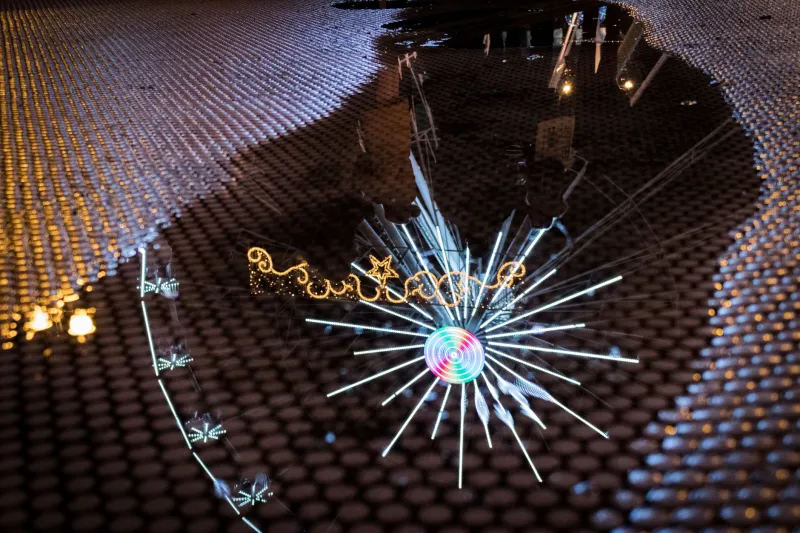
Photo: Ximonic (Simo Räsänen), CC BY-SA 3.0, via Wikimedia Commons
There is a particular kind of disappointment that only arrives at 7.40am on a frostbitten towpath: the shutter fires, the screen wakes, and then the battery icon drops from three bars to a blinking red sliver in the space of four frames. Nothing has failed. The chemistry has simply slowed down, and no amount of firmware is going to argue with physics.
Spend a November and December shooting outdoors in Britain and you learn quickly that winter reliability is not a camera feature. It is a routine. This is the routine I have settled into after a few seasons of getting it wrong in public.
What the Cold Actually Does
Lithium-ion cells do not lose charge in the cold so much as lose enthusiasm. Internal resistance climbs, voltage sags under load, and the camera's power management reads that sag as an empty battery. Warm the same cell back to room temperature and a good chunk of that apparent loss evaporates.
That matters because Olympus bodies are power-hungry in exactly the ways winter encourages. The OM-1's viewfinder, in-body stabilisation, and the Wi-Fi you forgot was on all draw current. Long exposures, high-res shot modes and Live Composite hold the sensor and processor awake for minutes at a time. Add a cold-soaked battery and you can watch a full BLX-1 behave like a half-charged one.
In practice: a battery that gives you 500 frames in September might give you 250 in a hard frost, and fewer still if you are chimping on the rear screen with gloves on.
Test One: Pocket Versus Rucksack
I ran the same walk twice on consecutive frosty mornings near Kinder Scout — roughly two hours out, around 180 frames each time, one BLS-50 in an E-M5 and one BLX-1 in an OM-1.
Day one, spares stayed in the top of a rucksack. Day two, they lived in an inside jacket pocket against my ribs, in a small zip pouch with a folded microfibre.
The rucksack spares came out cold to the touch and delivered noticeably fewer frames before the warning appeared — the sort of difference you feel rather than measure precisely. The pocket spares were warm, dry and boringly reliable. Body heat is free, and it works.
Caveats worth knowing. Do not carry loose cells jangling against keys. Do not put them next to a chemical hand warmer — sustained heat above about 30°C is worse for cell life than cold. And do not seal a cold battery into an airtight bag and stuff it somewhere warm and forgotten; you will get condensation on the contacts.
Test Two: Silica in the Bag
A camera bag is a small, humid ecosystem. Cold air holds little moisture; warm air holds plenty. Every time you open the bag in a warm café, damp air gets in and later condenses on whatever is coldest.
A 50g sachet of reusable indicating silica in the main compartment made a visible difference over a two-week period — beads turning from orange to green within about ten days of daily use. Two sachets in a larger backpack is not overkill. Recharge them on a radiator or in a low oven as the instructions say, and keep a spare pair cycling.
Silica will not rescue a soaking wet bag. It is a humidity buffer, not a towel.
Test Three: Acclimatisation Timings
This is where most winter damage happens, and it is entirely avoidable.
Coming in from a cold street to a warm pub or living room, the camera body stays cold for a long time. Moisture in the indoor air condenses on it — on the outside, in the mount threads, in the battery compartment, and eventually inside the lens. The classic symptom is a rear element that fogs on the inside and stays that way for days.
My timings, tested with a cheap hygrometer and a lot of impatience:
- Camera and lenses go into a zip-top bag (or a dry bag) before stepping indoors, with the air squeezed out as best you can.
- The bag stays closed for 25–35 minutes in a normally heated room. Twenty is usually enough for a small prime; a 40-150mm f/2.8 takes longer because there is more glass and metal to equalise.
- Only then do you open it up, ideally somewhere with decent airflow rather than a steamy kitchen.
Physically, the camera is not especially fragile. Psychologically, waiting half an hour with a card full of frost shots is agony. Put the kettle on. It is the cheapest insurance in photography.
Frost, Fog and Christmas Lights
Three winter subjects, three specific cold-weather notes.
Frost. Front elements fog when you breathe near them, and a fogged filter at -2°C can take ten minutes to clear. Keep the lens hood on, work from behind the camera rather than leaning over the front element, and resist the urge to wipe — you will smear rather than clear. A microfibre kept in an inside pocket stays usable; one kept in a cold bag does not.
Fog. Fog is moisture, and moisture loves a cold sensor stack. Cameras that have been in a warm car and then out into valley fog will fog internally at the worst moment. Let the body equalise before you start shooting, and bring a second card so you are not faffing with a cold card slot in the dark.
Christmas lights. Live Composite and long handheld exposures drain power fast. Carry two spares minimum for an evening market shoot, and switch the rear screen to its dimmest setting. If you are shooting on a tripod, consider a USB-C power bank in a pocket, cable tucked inside your jacket — the OM-1 will happily run from PD power, and a warm bank keeps its own voltage up.
Reader Tips From the Field
A few notes from readers who have clearly learned this the hard way.
"I keep a spare battery in a sock in my trouser pocket. Sounds daft, works perfectly, and the sock stops it rattling against my keys." — Alan, Hebden Bridge
"Two silica sachets in the bag, one in the lens case. I recharge them every Sunday whether they need it or not. It has become a ritual, like cleaning the filter." — Priya, Bristol
"My rule is: bag before the door, open after the tea. If I break the rule I get fogged optics and I deserve it." — Callum, Dundee
"I take the battery out of the camera before it comes indoors. It equalises faster on its own and I am not tempted to start reviewing shots while everything is still cold." — Ruth, Norwich
The Short Version
Warm spares against your body. Silica in the bag, recharged regularly. Bag before the door, open after twenty-five minutes. Hood on, screen dim, hands out of your pockets only when necessary.
None of it is glamorous. All of it is the difference between a camera that keeps up with a British winter and one that quietly gives up halfway through the good light.