When the Street Goes Amber: Photographing Britain’s Sodium Holdouts with Olympus
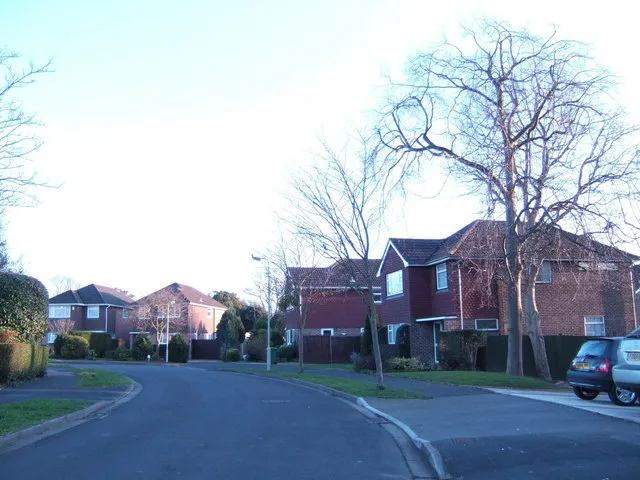
Photo: Jonathan Billinger, CC BY-SA 2.0, via Wikimedia Commons
Every few weeks, another orange pool outside a chip shop goes white. The change is easy to miss in daylight, but at night it resets the mood of a street: the amber wash under a railway arch, the peach-coloured puddle in a retail park, the long sodium smear down a residential road. As LED replacement rolls on through 2026, those scenes are becoming a limited edition. If you shoot Olympus and care about British night colour, this is a field guide to making the most of what is left.
Why orange still matters
Sodium-vapour lighting is unfashionable because it is inefficient, but inefficiency is not the same as irrelevance. Its narrow spectrum turns a street into a drawing: edges soften, colours collapse into amber and near-black, and faces become anonymous. LED can render more truth, but more truth is not always more picture. The sodium street is a distinct visual signature of postwar Britain — council estates, back lanes, football ground car parks, the damp walk home from the station. Photograph it now and you are documenting infrastructure as much as making a mood piece.
The craft argument is simple: sodium teaches you to see in tone rather than colour. When everything is orange, composition has to do the work. You notice the shape of a wheelie bin, the rhythm of bollards, the way a wet kerb catches the lamp. That discipline transfers to every other kind of night photography.
Find the holdouts before the van arrives
Start with places that are expensive or awkward to rewire: long residential terraces, back alleys, small car parks behind shops, railway embankment paths, industrial estates and pedestrian subways. On the edge of town, where the road becomes a lane, you will often find a last pocket of sodium hanging on. Regional variation is real — some councils began replacement earlier than others — so ask locally rather than assuming a whole city is gone. A quick evening recce on Google Street View can show old orange lamps, but check on foot: the maps lag behind the switch-over.
Go out in damp weather if you can. Wet tarmac doubles the glow, and the orange reflection does half the composition for you. Fog is even better, but be careful: sodium in fog goes lurid quickly, and you may need to pull the exposure down to keep the lamp cores from blocking up.
A white-balance recipe that respects the glow
Olympus colour is one of the reasons to shoot this subject. The temptation is to set tungsten white balance and neutralise everything, but that kills the point. Sodium is a monochromatic source, so you cannot fully correct it anyway; you can only decide how much amber to keep.
Start with a custom Kelvin setting around 3800–4300K. That keeps a warm cast while stopping the orange from becoming a flat wash. If the scene has mixed LED and sodium — increasingly common — try 4000K and use the white-balance compensation grid to add a little magenta (M+1) if the shadows go green. For a more graphic, almost poster-like orange, push the Kelvin up towards 5000K and let the lamps dominate. Shoot raw plus JPEG: the JPEG gives you a reference for the colour you saw, and the raw gives you room to pull back a blown lamp later.
Do not be afraid of black. Sodium scenes often look stronger with the shadows allowed to fall in. Lift them too much and the orange loses its punch.
Noise, exposure and the tripod question
Handheld night work with an Olympus body is more practical than it used to be, thanks to IBIS. A fast prime at f/2 or f/2.8, ISO 1600 and 1/15sec can be enough in a bright pool of sodium, especially if you brace against a wall or a bin. Expose for the lamp and the lit surfaces, not the shadows. If the highlights clip, the orange turns to yellow mush; a little underexposure is safer.
For static streets, use a tripod and drop to ISO 200. Exposures of 4–15 seconds will smooth the scene and keep detail in the lamp glass. Long-exposure noise reduction doubles your exposure time, so bring a second battery and keep it warm in a pocket. High ISO noise reduction is best left low or off if you plan to process the raw yourself; the grain in a sodium scene often looks like film texture rather than a fault.
Live Composite: the right tool, with caveats
Live Composite is tempting here, and it can be excellent for light trails and moving traffic under sodium. But it is not a magic night mode. The base exposure sets the ambient light, and the camera only adds new brighter detail frame by frame. If the base is too dark, you get lamp cores and little else; if it is too bright, the orange clips and the composite has nowhere to go.
A sensible starting point is a 1–2 second base exposure at f/5.6 and ISO 200, then build up the scene in Live Composite until the light trails feel right. Use a tripod, obviously, and avoid scenes where the light itself is changing — clouds racing across a lamp, or an LED retrofit flickering on the edge of the frame. Sodium is usually stable, which makes it a good Live Composite subject; mixed lighting is not. And remember that people and cars do not vanish. They paint themselves into the picture, which may be exactly what you want, or exactly what you do not.
Shooting people, windows and residential streets
Etiquette matters more here than in a city centre. Photographing from a public road is generally lawful in the UK, but a residential street at 11pm is still somebody’s front room. Do not shine lights or flash into windows, do not stand outside one house for half an hour, and keep your tripod close to the wall rather than blocking the pavement. If someone asks what you are doing, explain plainly — you are photographing the old streetlights before they disappear. Offer to show the back of the camera. Avoid making identifiable faces or house numbers the subject of the picture. In private car parks, ask first if there is a security cabin or a shop manager about.
The frame to make before the van arrives
Look for the ordinary set pieces: a lone lamp above a back gate, a row of bollards throwing long shadows, the orange edge of a puddle on cracked tarmac, a bus shelter glowing like a fish tank. Shoot wide for context, then tight for the texture of the light on brick and wet paint. Take one frame that is simply about the colour — no story, no street furniture, just the amber fall-off into darkness. That is the picture that will look like a document in ten years.
The LED switch-over is not a tragedy; it is progress, and most people will be glad of the clearer light. But progress has a deadline, and the sodium street is already becoming history. Take the Olympus out on the next clear, damp evening, find a road that has not yet gone white, and give the orange one last proper look.