Let the Shadows Sing: An Olympus Case for Keeping the Grain
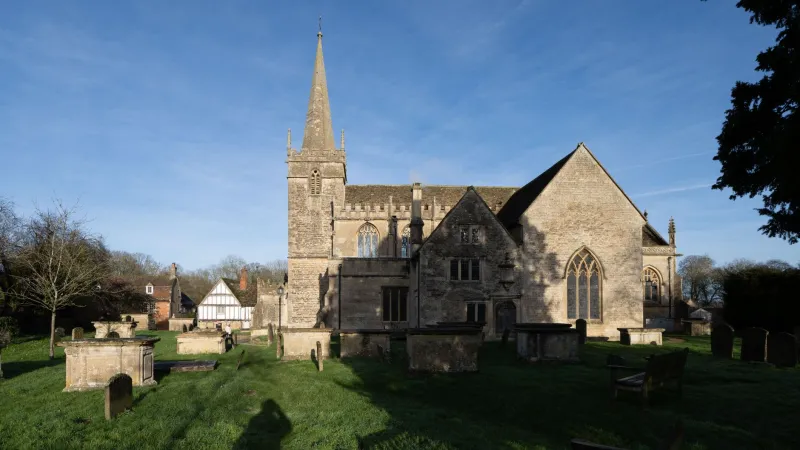
There is a particular hush inside an English parish church at 3.45pm in November. The light through the south aisle has gone the colour of weak tea, the stone is holding on to the last of it, and the only moving thing is a flower arranger wrestling with a pedestal. You raise the camera, watch the shutter speed fall to 1/30sec, and the old reflex kicks in: push the ISO? Apologise? Pack up?
For years, Micro Four Thirds shooters were trained to treat ISO 3200 as a moral failure. Full-frame was the assumed standard, clean files were the assumed goal, and any visible luminance noise was something to be explained away in the pub. In 2026 that calculation has shifted. Not because our sensors have suddenly become noiseless — they haven’t — but because AI denoise has become an ordinary part of the raw workflow. It is no longer a rescue mission. It is a finishing tool. Used with restraint, it buys back the confidence to shoot the pictures we used to talk ourselves out of.
The four o’clock problem
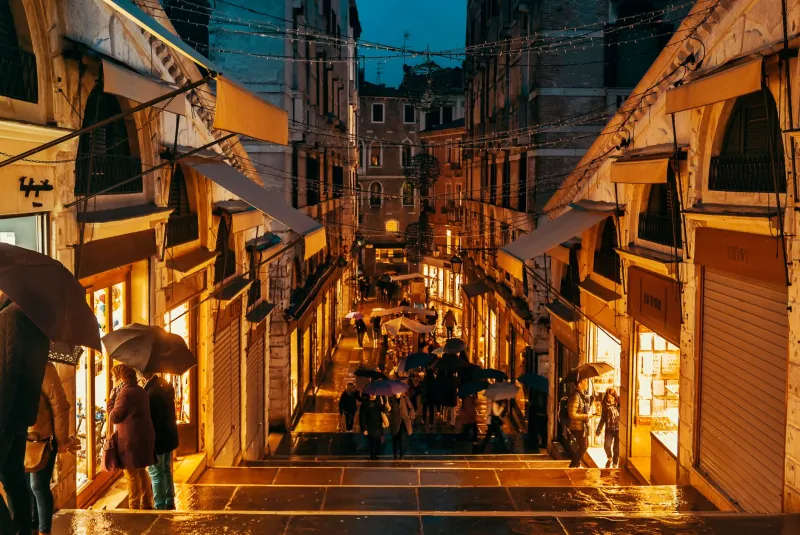
British winter light is not just dim; it is abrupt. At four o’clock the high street can still look like a photograph from the outside, then you step into a pub and the meter drops three stops. The windows are small, the ceilings are low, the brass is doing its best, and someone is already lighting a candle. This is exactly the sort of scene where Olympus cameras earn their keep — excellent IBIS, fast primes, decent metering — and exactly the sort where a nervous shooter underexposes by two stops and then complains about the shadows.
My advice is to stop treating high ISO as a last resort. Treat it as a normal exposure setting. In a pub interior I would rather shoot at f/1.8, 1/80sec and ISO 3200 than f/4, 1/15sec and ISO 800. The first frame has a chance of stopping a conversation; the second has a chance of stopping nothing at all. Noise that you can manage in post is usually a better trade than subject movement you cannot.
What actually matters in low light
The order of decisions matters more than the number on the ISO dial. Shutter speed comes first, because it governs whether people are sharp. Aperture comes second, because it governs depth and lens character. ISO comes last, because it is the variable that modern raw processing can most convincingly tidy up. With Olympus IBIS I can handhold a static church interior at 1/10sec, but the moment a verger walks through the frame I want 1/80sec or faster. That is what auto ISO is for. Set a sensible ceiling — 6400 is not reckless on an OM-1 or E-M1-series body — and let the camera make the boring decision.
Exposure compensation still matters. The temptation in a dark room is to expose for the shadows and blow every window and lamp to white. Better to protect the highlights and accept a little more noise in the corners. Raw files from Olympus bodies hold useful detail in the upper midtones, but clipped window light is gone. I often sit at minus 0.3 or minus 0.7 EV in a dim interior, then lift the shadows gently in post. That is not cheating; it is choosing which compromise you can live with.
A denoise workflow that doesn’t embalm the picture
The problem with AI denoise is not that it works. The problem is that it works too well when you let it. A heavy pass at default settings can turn stone, wool, skin and beer glass into the same smooth substance. The picture looks clean and feels dead. The aim is not noise-free; the aim is noise-in-the-right-amount.
Start with the camera. I keep the Olympus Noise Filter low rather than off, especially for JPEGs, and I shoot raw for anything I care about. In post, deal with chroma noise first — the coloured speckle is the ugly part — and leave luminance noise until you have judged the image at output size. A file that looks gritty at 200% on a 27in monitor may look completely natural at A4. If you are printing, make the print test before you make the denoise decision. If you are sharing online, remember that most viewers are looking at a phone, not a pixel-peeping bench.
When I use AI denoise, I use it modestly. In Lightroom terms, something in the 25–40 range is often enough for a well-exposed ISO 3200 file; ISO 6400 might want a little more, but rarely the maximum. Then I add back a small amount of grain — usually 5–10 — to restore a bit of tooth. If the software allows masking, denoise the shadows and leave the lit areas alone. If it doesn’t, duplicate the layer, denoise the copy, and mask it in. The point is to keep texture in the places that matter: the weave of a coat, the grain of a pew, the condensation on a pint glass.
When the grain is the picture
Not every frame wants to be clean. A dim church interior with a little luminance noise can feel more honest than a plasticised version of the same scene. The same goes for a winter pub: the soft chatter of grain suits the soft chatter of the room. At four o’clock on a wet high street, a bit of grit in the shadows can hold the atmosphere better than a surgically smooth file. Noise is not automatically a flaw any more than shallow depth of field is a flaw. It is a texture, and texture is part of craft.
That does not mean abandoning technique. It means being deliberate. Use the ISO you need, expose for the highlights you want to keep, stabilise the camera, and then process with a light hand. The photographers who get the most from Micro Four Thirds in low light are not the ones who pretend noise does not exist. They are the ones who decide how much of it belongs.
A small dare for a grey afternoon
Next time the light goes early, set ISO 3200 manually and leave it there for an hour. Walk into a church, a pub, a railway station concourse, a bookshop with one weak bulb in the ceiling. Shoot the ordinary stuff: hands, stone, steam, the barman pulling a pint. Then process one frame twice — once with your old instinct for maximum cleanliness, once with a restrained denoise and a little grain left in. Print both at A4 or look at them on the biggest screen you own. I suspect you will prefer the second, and I suspect you will stop apologising for the first.