Attic Salvage: A Macro Workflow for Britain’s Curled and Fading Negatives
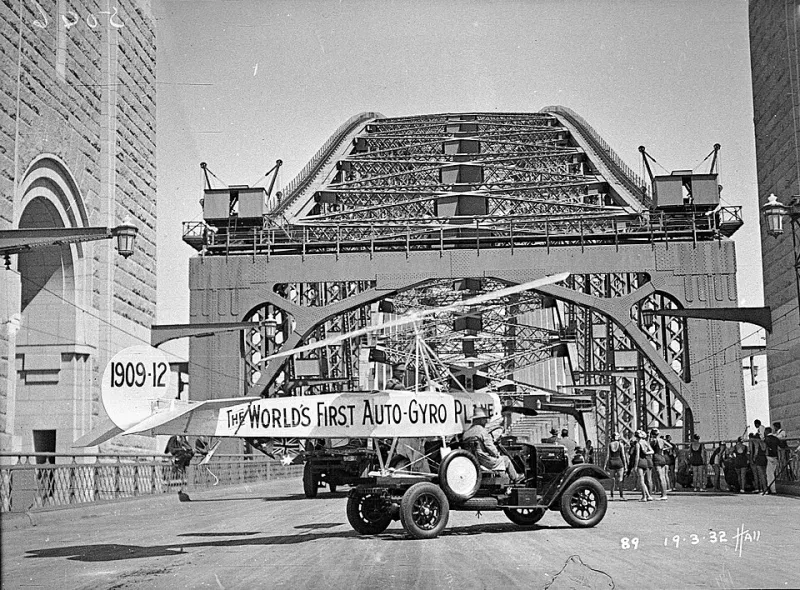
Photo: Hall and Co., Public domain, via Wikimedia Commons
There is a particular kind of British archaeology that happens in lofts: a cardboard box, a Boots envelope with a date pencilled on the flap, and a strip of 35mm negatives that has spent twenty summers expanding and contracting against the joists. The pictures are often ordinary — a back garden, a christening, a car that nobody remembers — but the negatives are the only surviving originals. Prints fade, files get lost, and the loft always wins in the end. In 2026, with a decent Olympus body and a 60mm macro, you can mount a quiet rescue operation at the kitchen table.
Start with triage, not scanning
Empty the box onto a clean sheet of acid-free paper and sort into three piles: negatives, prints, slides. Then sort again by condition. Damp, mouldy or stuck-together material goes into its own bag and gets dealt with last. Do not clean a negative with your breath and a tea towel — emulsion is softer than it looks, and a scratched original cannot be undone.
Label as you go. A strip of six frames with no context is just a strip of six frames. Write the envelope details, the rough date, the names you recognise and the box number on a simple index card. That card will save you hours later, when the file names start to blur together.
The copy rig: Olympus body, 60mm macro, cheap light pad
You do not need a dedicated film scanner for a family archive. A micro four thirds body with the M.Zuiko 60mm f/2.8 Macro is a capable copy camera. The 60mm gives you enough working distance to avoid bumping the negative, and at around 0.5x magnification it fills the frame with a 35mm strip.
Set the camera on a tripod or copy stand pointing straight down. A cheap A5 LED light pad underneath provides even backlight; mask the edges with black card so stray light does not creep into the lens. For prints and slides, a north-facing window is your friend — soft, cool, consistent light with no direct sun. Stand prints upright, bounce a little white card from the shadow side if needed, and keep the camera parallel to the paper. A remote release or two-second timer removes the last bit of shake.
Taming curl without hurting the emulsion
Curled negatives are the norm, not the exception. Do not force them flat under heavy books straight away. Reverse-roll the strip gently between sheets of acid-free paper and leave it for a day or two. A clean board and a light weight can help, but never heat the film and never pull against the curl.
For stubborn strips, place the negative under clean glass with thin spacers at the edges. Anti-Newton glass is worth the extra cost if you plan to copy many frames; ordinary glass can produce rainbow rings where it touches the emulsion. Keep the glass spotless, work in a dust-free room if you can, and shoot with the lens hood almost touching the glass. A black card with a lens-sized hole around the lens kills reflections from the light pad and from any window light behind you.
Dust, damp and the mould question
Dust is easy to make worse. Use a rocket blower first, then a soft anti-static brush. For fingerprints on the base side, a lint-free swab with a little 99% isopropyl alcohol can work — but keep it away from the emulsion side and test on a discard frame first. Never use water on film. If a negative is mouldy, isolate it, wear a mask, and work in a ventilated room. Dry-brush what you can; for valuable or badly affected material, talk to a conservator rather than improvising with home remedies.
Fading prints respond well to a plain copy setup. Avoid sharpening during capture, shoot raw, and leave colour correction for later. Slides need the light pad and a dark room; reflections from the glass mount are the enemy, so angle the camera square-on and flag the light with black card.
Shooting settings that leave room to fix things
Use raw. Set the aperture around f/8 for a sensible balance of sharpness and depth of field, base ISO, and a shutter speed that keeps the histogram off the clipping points. Focus manually on the grain, not on the dust. Bracket a little if the negative is dense. Frame slightly wider than the image so you keep the rebate and any edge markings — those little numbers and lab codes are part of the archive.
In-camera inversion and colour correction
Some Olympus bodies offer a negative-film picture mode or art filter. Treat it as a preview, not a master file. For colour negatives, the orange mask is the real problem: set a custom white balance on the blank film rebate under the same light, then shoot raw. In Olympus Workspace, invert the tone curve, pull the black point to the film base and the white point to the brightest highlight, then adjust colour balance channel by channel. Black-and-white negatives are simpler — invert, set the black and white points, and resist the urge to add contrast until you have a clean neutral file.
A naming and backup routine that survives
Use a boring, consistent name: ARCHIVE_Surname_Box02_Strip03_Frame07_20261109.tif. Keep a CSV or spreadsheet index with the envelope details, names and notes. Save a working copy on an SSD, a second copy on another drive, and a third off-site or in the cloud. Check a few files open before you file the box away. The point is not perfection; it is a chain of copies that can survive a house move, a failed drive and another decade in the attic.
The quiet urgency here is real. Local history collections and family archives across the UK are holding material that will not survive another ten years in a damp loft. You do not need to digitise everything. Start with one envelope, one strip, one afternoon. The negatives have waited long enough.