Small Bodies, Big Argument: The Case for a Used Olympus Pen-F in 2026
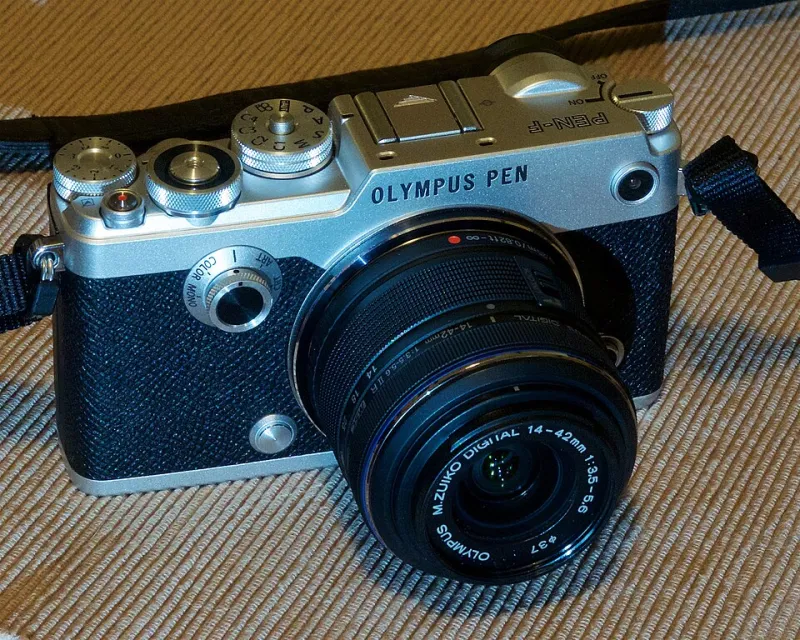
Photo: Skyring, CC BY-SA 4.0, via Wikimedia Commons
There is a particular kind of fatigue that sets in after you have taken your ten-thousandth phone photo. The files look fine, the colours are pleasant, the dynamic range is impressive, and yet the whole process feels like sending the same postcard over and over. The antidote is not necessarily a bigger camera. Sometimes it is a smaller, stranger, more deliberate one.
The Olympus Pen-F is that camera for a lot of people. Launched in 2016 and long since discontinued, it has spent the last few years drifting through the used market while photographers argue about whether it was overpriced, underpowered or simply misunderstood. In 2026, with compact Micro Four Thirds bodies looking increasingly sensible and phone photography feeling more homogenised than ever, the Pen-F looks less like a nostalgia piece and more like a quiet argument winner.
The design argument
The Pen-F is not subtle in the hand. It has a flat, rangefinder-style body, a magnesium alloy shell, a beautiful little viewfinder hump and a front-mounted Creative Dial that invites you to actually use it. It feels like a camera, not a computer with a lens attached. That matters more than it should. On a grey Saturday in York, Bath or Glasgow, a small body with a 17mm f/1.8 on the front is discreet without being invisible. People notice it, but they do not bristle the way they sometimes do when a big zoom is pointed in their direction.
It is not weather-sealed, which is a genuine limitation in the UK. A rain cover or a jacket pocket is part of the deal. But the payoff is a camera you can carry all day without thinking about it. Pair it with the 14-42mm EZ for a genuinely pocketable travel kit, or the 45mm f/1.8 for portraits and street details. The whole bag weighs less than a single full-frame zoom.
Colour profiles that do the work
The Creative Dial is the Pen-F's party trick. It gives you direct access to Colour Profile Control and Monochrome Profile Control, with adjustable settings for saturation, contrast and highlight and shadow tone. You can shoot JPEGs that look finished, or use it as a preview for raw files you will edit later. For UK light, which often runs from soft grey to flat grey with a brief cameo from the sun, the Muted profile is a joy. Monochrome Profile 2 gives you contrast without the crunchy look. It encourages you to make decisions in the field rather than deferring everything to a preset.
That is the real answer to phone fatigue. It is not that the Pen-F takes better pictures than a modern phone in every measurable way; it does not. It is that the camera asks you to choose. You pick a profile, set an aperture, decide what matters. The process feels like photography rather than content collection.
What it costs in 2026
Used prices have settled into an interesting place. A good, clean Pen-F body typically runs from around £550 to £750 in the UK, with worn examples nearer £450 and boxed mint examples pushing £850. That is not pocket money, but it is well below the price of a new full-frame body and often below a decent phone. Lenses are the real bargain: the 17mm f/1.8 can be found for £180 to £250, the 12mm f/2 for £250 to £350, the 45mm f/1.8 for £130 to £180 and the 14-42mm EZ for £100 to £150. A complete small kit for under £1,000 is realistic if you shop carefully.
Check reputable UK dealers such as MPB, Wex, London Camera Exchange and Ffordes, and compare with private sales on eBay and enthusiast forums. Private sellers can be cheaper, but you lose the warranty and the returns window. Ask for the serial number, sample images and a clear statement of condition.
What to check before buying
The Pen-F is generally robust, but it is a used electronic camera and deserves a proper inspection. Check the Creative Dial detents and make sure every position registers. Test the EVF, the rear screen and all buttons, including the tiny ones. Look for screen delamination, worn rubber grips and a loose battery door. Inspect the sensor for scratches or stubborn dust, and check the lens mount for tightness. Ask whether the original FL-LM3 flash is included, because it is useful and easy to lose.
Test the IBIS by listening for rattles and shooting a few frames at slow shutter speeds. Check the hot shoe, the USB port and the SD card door. If you can, bring a lens and shoot a test image at f/8 against a plain wall to spot sensor marks. Ask about shutter count if the seller knows it, but do not treat it as gospel. A clean body with a good screen and a smooth dial is worth more than a low-count example that has been knocked about.
Where it fits in 2026
The Pen-F is not the camera for sport, wildlife or professional video. Its contrast-detection autofocus is not a match for modern subject-tracking systems, and its video specs look modest by 2026 standards. Battery life is fine rather than brilliant, so carry a spare. But for street, travel, portraits and the kind of slow, observational photography that makes a city feel like a city, it is still a lovely tool. It is small enough to take everywhere and good enough to make you leave the phone in your pocket.
Reader photos: the small-camera challenge
We want to see the case made in pictures. Send us your street and travel frames shot on a Pen-F or any compact Micro Four Thirds body, along with a sentence about why you chose that camera. We will feature a selection in the Reader Challenge gallery. The brief is simple: small camera, big city, no excuses. If you have been thinking about downsizing, this is your nudge.