The £40 Time Machine: Adapting Old OM Lenses to Your Olympus
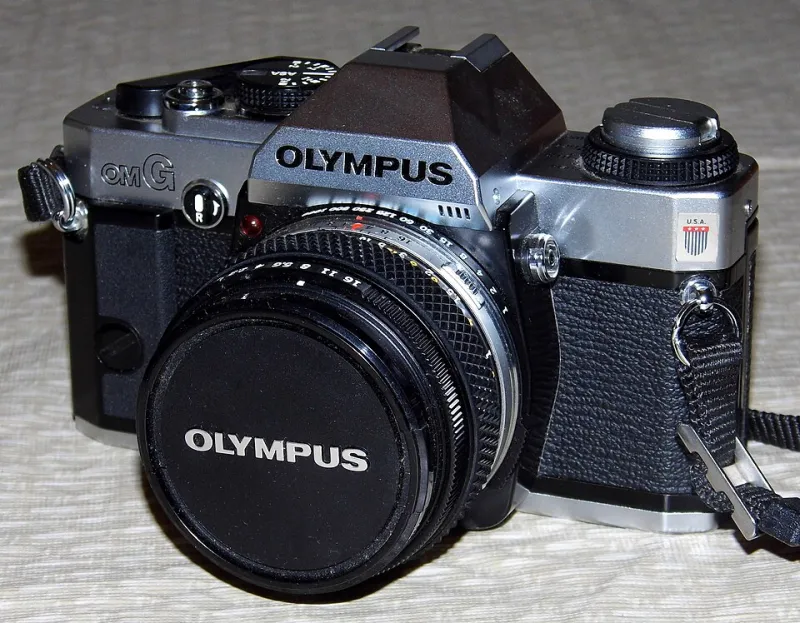
Photo: Joe Haupt from USA, CC BY-SA 2.0, via Wikimedia Commons
Adapting vintage OM-mount lenses to a modern Micro Four Thirds Olympus is one of the most satisfying corners of camera culture. It's cheap, it's tactile, and it connects you to the system's heritage—after all, the OM-1 film SLR was a revolution in compactness. But there are quirks. Here's what you need to know before you screw a 50-year-old lens onto your OM-D.
Why bother with old glass?
Three reasons: character, cost, and craft. Old OM lenses render differently—softer wide open, with gentle contrast and a certain glow that modern glass often corrects away. They're also cheap. A decent 50mm f1.8 can cost £30–£60 at a UK camera fair, less if you're lucky in a charity shop. And using them slows you down. Manual focus and stop-down metering force you to think about aperture, distance and light in a way that autofocus can make a bit too easy. It's photography as craft, not just capture.
Adapters: the simple bridge
You need a dumb OM-to-Micro Four Thirds adapter. No electronics, no glass. Prices range from £10 on auction sites to £40 for a branded one. Buy a metal-bodied adapter with a decent release pin; cheap plastic ones can wobble. The adapter adds about 24mm to the lens length, which is fine. Mounting is straightforward: line up the dots, twist until it clicks. Just don't force anything—if it feels tight, stop.
Focusing: peaking and magnification
Your Olympus has excellent manual focus aids. Enable focus peaking (Menu > Gear > D > Peaking) and set it to a colour that stands out—yellow or red work well on most scenes. Then assign magnification to a button. I use the Fn1 button to punch in at 5x or 10x. In practice, focus wide open, then stop down to f5.6 or f8 for depth of field. The peaking highlights what's sharp; magnification confirms it. On a busy street, zone-focus instead: set the lens to f8, focus at 3m, and everything from about 2m to infinity is acceptably sharp.
IBIS and focal length
This is the big one. Your camera's in-body image stabilisation needs to know the focal length. For an old 50mm lens on Micro Four Thirds, that's a 100mm equivalent. Go into the IS settings and set it manually to 100mm. If you forget, IBIS will still work but less effectively—and you might get blurry shots at slow shutter speeds. It's a two-second job, and it makes handheld shooting at 1/15sec genuinely possible with a 50mm.
Metering and exposure quirks
Old lenses don't communicate with the camera. You're in stop-down metering territory. Set the camera to Aperture Priority, choose your aperture on the lens, and the camera will meter through the stopped-down lens. It works, but there's a catch: if you focus wide open and then stop down, the meter will change. So either focus at your shooting aperture (darker viewfinder, but accurate) or use exposure compensation. Live view helps enormously—what you see is what you get. I usually shoot in Aperture Priority with -0.3 EV to protect highlights, then adjust in raw.
Where old lenses shine (and where they don't)
They shine for portraits, still life, architecture details, and anything where you have time. The 50mm f1.8 is a lovely short portrait lens on MFT (100mm equivalent). The 135mm f3.5 is a bargain telephoto for compressed cityscapes. They struggle with fast action—manual focus on a running dog is an exercise in frustration. They also flare more than modern coatings, and contrast can be low wide open. Embrace that as character, or stop down to f5.6 for a cleaner look.
Buying in the UK: charity shops, fairs and online
Charity shops are hit and miss. You might find a dusty OM-10 with a 50mm f1.8 for £20, or nothing for months. Camera fairs—like the ones in London, Birmingham or Manchester—are better: you can handle the lens, check the glass, and haggle. Online, look for sellers who accept returns. Check for fungus (look through the lens against a light), haze, oil on aperture blades, and stiff focusing. A little dust is fine; scratches on the front element are not. And remember: you don't need the camera body, just the lens.
Sample gallery
Here are three frames from a recent walk in Edinburgh with an OM 50mm f1.8 on my OM-5:
- A close-up of a rain-streaked window in Stockbridge, shot at f2.8.
- A portrait of a busker on the Royal Mile, f2.0, 1/250sec.
- A compressed detail of the Castlehill rooftops, f5.6.
The rendering is softer than my 45mm f1.8, but it has a warmth that suits the grey light.
Your challenge: one old lens, one week
We challenge you to spend a week shooting with a single adapted OM lens. Post your best three shots in the comments or tag us with #OlympusOldGlass. We'll feature a selection in a reader gallery next month. No autofocus, no zoom, no excuses.