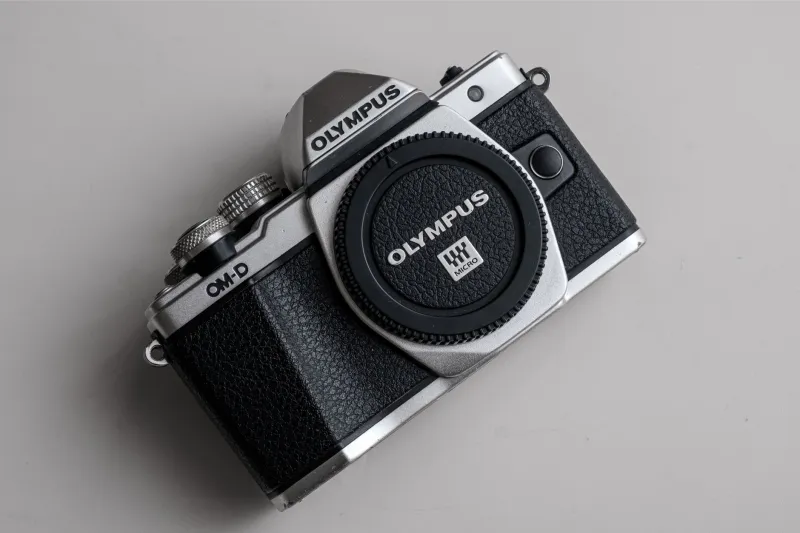
Salt, Squall and Shutter: A Coastal Winter Survival Guide for Olympus Weather Sealing
Photo: Raimond Spekking, CC BY-SA 4.0, via Wikimedia Commons
The forecast says showers. The harbour wall says something stronger. On the British coast in November, weather sealing is not a brochure bullet point; it is the difference between a bag of usable frames and a bag of expensive regrets. OM System bodies and PRO lenses have a well-earned reputation for shrugging off bad weather, but reputation is not a maintenance plan. This is a field guide to shooting the wet, windy coast with Olympus kit without treating your camera as disposable.
What weather sealing actually means on the coast
Weather sealing is a system, not a single gasket. It depends on the body, the lens mount, the port covers and the way you handle the camera. A sealed body with an unsealed lens is not a sealed camera. A sealed lens with a misted front element is not much use either. On the coast you are dealing with three things at once: fresh water, salt water and wind. Fresh water is annoying. Salt water is corrosive. Wind turns both into a fine mist that finds every gap you have opened.
The sensible baseline is an OM-1 or OM-5 body paired with a weather-sealed PRO lens. The 12-40mm f/2.8 PRO is the obvious one-lens answer for harbour walls, breaking waves and wet walks. The 12-100mm f/4 IS PRO gives more reach for distant surf and seabirds without changing lenses in the spray. The 8-25mm f/4 PRO is superb for big skies and cramped coves. The 40-150mm f/2.8 PRO is the one for compressing waves against lighthouses. None of these are invincible, but they are designed to be out there.
The ports, doors and weak points
Before you leave the house, run a finger around every rubber door. The USB-C and HDMI ports, the mic socket, the battery compartment and the card slot are the places where water gets in. Make sure every cover is clicked home, not just pushed shut. Check the hot shoe for grit. Look at the lens mount seal and wipe it clean. A grain of sand in the wrong place can hold a door open by a fraction of a millimetre.
On the beach, do not change lenses. That is the rule. If you must swap, do it in a sheltered doorway, inside a car or under a jacket that is doing its best impression of a tent. Keep the camera pointing down. Have the incoming lens ready before you twist the old one off. It is not a graceful process, but it is better than a sensor covered in salt.
Lens choices that make sense in a squall
The compact f/1.8 primes are lovely things. The 17mm and 25mm are small, sharp and discreet. They are also not the lenses I would choose for a soaking. If the forecast is genuinely grim, take a sealed zoom and a microfibre cloth. If you are shooting from a shelter, or the weather is merely British rather than biblical, a prime is fine. Just be honest about the risk. Sea spray is not a gentle mist. It leaves a film.
A filter on the front of a sealed lens is a cheap sacrifice. A clear or UV filter takes the brunt of the spray and can be cleaned without worrying about the coating on your front element. A lens hood keeps rain off the glass and adds a little physical protection. Neither makes the camera waterproof. They just buy you time.
Settings for a moving sea and a moving photographer
The sea is bright, the sky is often brighter, and the wind is trying to move you. Start with aperture priority and f/5.6 to f/8 for seascapes, then drop to f/2.8 or f/4 if you are photographing people on the promenade. Use a shutter speed of around 1/250sec to freeze spray, or 1/4sec to 2sec with an ND filter and a tripod if you want the smooth, milky water look. IBIS helps with the handheld stuff, but it cannot stop the wind moving your body.
Set auto ISO with a sensible ceiling, perhaps 3200, and keep an eye on the highlights. Wet sand and white water blow out quickly. Try minus 0.7EV and bring the shadows back in raw. Use continuous autofocus for waves and dogs, single AF for rocks and buildings. Silent shutter is handy in quiet coves, but be aware of rolling shutter if anything moves fast across the frame. And carry a spare battery in an inside pocket. Cold drains them faster than you expect.
Protection without a plastic bag faff
You do not need to wrap your camera in a carrier bag for every shower. A proper rain cover is quicker, quieter and less likely to fog the lens. If you are using a cover, make sure it does not flap over the front element. A simple shower cap over the lens hood is a decent emergency trick. Keep a dry microfibre in a zip pocket and another in the bag. Do not use the same cloth for salt-covered glass and the rear element.
Condensation is the quiet enemy. If you come from a cold beach into a warm cafe, put the camera in a dry bag or a zip-lock bag with a silica pack before you go inside. Let it acclimatise slowly. Do not take the lens off while the camera is cold and the room is warm. That is how you get a fogged sensor and a very long wait.
After the walk: the salt routine
Back home, resist the urge to switch on the camera and start chimping. Blot the outside with a dry cloth. Remove the lens only when everything is dry and you are in a clean, still room. Wipe the barrel and mount with a slightly damp cloth using fresh water, not seawater, then dry immediately. Clean the filter with fresh water and a soft cloth. Do not use a hairdryer. Do not put the camera on a radiator. Leave the battery door and port covers closed until the body has reached room temperature.
Check the buttons and dials for a gritty feel. If salt has got in, a damp cloth and patience are better than a soak. If the camera has taken a proper dunking, stop using it and get it looked at. Weather sealing is there to give you confidence, not to make you careless.
The verdict: confidence, not invincibility
The best coastal kit is the one you will actually carry when the wind is up. For most Olympus shooters, that means a sealed body, a sealed zoom and a small bag of habits. The primes can come out when the weather softens. The sea does not care about your gear. It will test every door, every seal and every shortcut. Treat your camera like a tool that deserves a bit of care, and it will keep working while everyone else is packing up.