Half-Light in the Nave: Photographing Christmas Eve Worship with Olympus
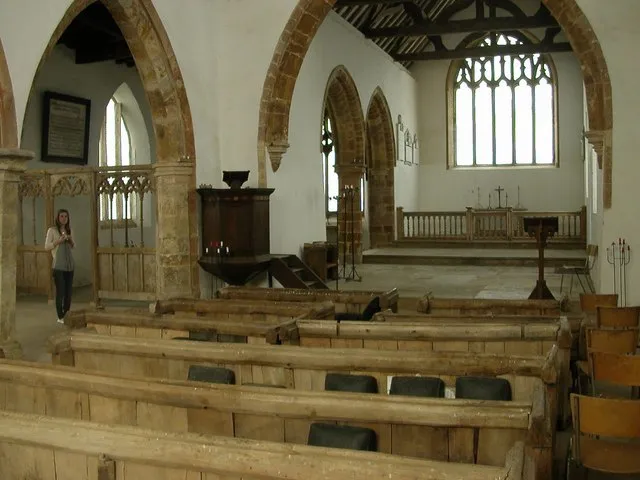
Photo: Ian Rob, CC BY-SA 2.0, via Wikimedia Commons
There is a particular kind of British half-light inside a church on Christmas Eve. It is not the blue-hour glow of the street outside, nor the amber wash of a living room. It is candle flame on limestone, wool coats in cold pews, and a nave that seems to hold its breath between carols. For a photographer, it is gorgeous and awkward in equal measure. The light is low, the etiquette is strict, and the last thing anyone needs is a burst of flash during the first verse of ‘Once in Royal David’s City’.
This guide is for Olympus shooters heading to a carol service or midnight mass in 2026. It is not about turning worship into a photo opportunity. It is about making a few respectful, atmospheric frames that feel like the room actually felt — and knowing when to leave the camera alone.
The room sets the rules
Before you think about ISO, think about permission. Church communities are welcoming, but they are also protective of the service. Ask the churchwarden or steward before the start whether photography is allowed, and where you may sit. Some churches permit photography at carol services but not during communion; others ask for no images at all. Accept the answer without negotiating. A polite question before the service is worth more than any lens.
Position matters. Sit at the end of a pew, near a side aisle if possible, so you can lift a camera without leaning across other people. Do not wander during prayers, readings or the sermon. The best frames often come from where you are already seated: the curve of a candlelit pew, a chorister’s face under a stall light, the procession passing at the back. If you need to move, wait for a natural pause — the gathering of the congregation, the invitation to sing, the quiet shuffle after the blessing.
And switch the camera to silent shutter before you enter. Not when the service starts. Before. Turn off AF beep, fake shutter sounds, Wi-Fi indicators and any screen brightness that could glow like a small television in a dark nave. Dim the EVF. If your Olympus has a monitor that can be folded in, fold it. The aim is to be visually and audibly forgettable.
Packing light, packing quiet
A Christmas Eve service is not the place for a full kit bag and a tripod. A small Olympus body and one fast prime will usually do more than a zoom that forces you to push ISO higher. The 17mm f/1.8 is lovely for the wider feel of a nave; the 25mm f/1.8 is a natural companion for pew-level scenes; the 45mm f/1.8 gives you a little distance without becoming intrusive. If you are further back, a 75mm f/1.8 can pick out a reader or a candle without crossing the aisle.
A compact zoom is fine if it stays at f/2.8, but be honest about the light. Churches are often darker than they look to the eye. The OM-D and OM bodies have excellent stabilisation, but stabilisation cannot stop a chorister’s head turning. For people, you still need a sane shutter speed.
Carry one spare battery in a warm pocket. Cold stone floors and old buildings drain batteries faster than a summer walk, and a spare in an inside coat pocket will keep its charge better than one left in a bag. A microfibre cloth is useful too; candle smoke, damp air and breath on the rear screen are all part of the evening.
Exposure when the light is mostly flame
Start at ISO 3200 and do not be frightened of 6400. On modern Olympus bodies, a carefully processed 6400 frame is often more respectful than a blurry 1600 one. If the church is very dark, 12800 may be necessary for a static scene, but expect to work the noise reduction in post. Shoot RAW. The candle highlights are easy to blow, and RAW gives you room to bring them back.
Aim for f/1.8 or f/2 where you can. For seated people, try 1/60sec or 1/80sec; for a reader who is holding still, 1/40sec can work with good technique and IBIS. For the nave itself, 1/15sec or slower can be fine if you brace yourself and accept that people may blur. Sometimes that blur is the picture: the movement of a congregation standing for a hymn, the soft trail of a candle procession.
Meter for the faces or the candle flames, not the dark corners. Spot metering on a face can help, but it can also overreact to a bright candle. Try centre-weighted metering and use exposure compensation at around -0.7EV to protect the flames. Check the histogram, but do not chase a perfect graph. A little darkness belongs in a Christmas Eve photograph.
White balance is a matter of taste. Candlelight is warm, and you may want to keep that warmth. Auto white balance can neutralise the room into something bland; a manual setting around 3200K to 3800K often preserves the amber feel. If you shoot JPEG, consider Natural mode for its calm colour, then adjust gently. If you shoot RAW, decide later whether the image should feel golden or merely warm.
Focus, timing and the quiet frame
Low-light autofocus is better than it used to be, but candlelit faces still test it. Use a small single AF point and place it on the eye or the edge of a face where there is contrast. Face detection can work when someone is close and facing you, but it may hunt in a dark pew. If it does, switch to single point and prefocus on the lectern, the pulpit or the place where the procession will pause.
Do not machine-gun the service. A short burst of two or three frames is enough. The quietest photographers are often the ones who watch the rhythm: the moment a reader looks up, the pause before a carol begins, the raising of candles at ‘Silent Night’. Midnight mass has its own shape — the lighting of the Paschal candle, the procession, the Gospel, the communion. Learn the order from the service sheet and you will know when a frame might be possible without becoming a distraction.
Watch for banding under any LED or fluorescent lighting. Silent shutter is wonderful, but electronic shutter can produce horizontal bands in some mixed lighting. If you see banding on the screen, switch to mechanical shutter only if it is quiet enough and the service allows it. In many old churches, the mechanical shutter of an Olympus body is soft enough, but silent is still the safer default.
Stabilisation is a posture, not a button
IBIS helps, but it works best when you help it. Tuck your elbows in. Breathe out slowly. Brace your shoulder against a pillar or the end of a pew if it does not disturb anyone. Do not lean over the person in front. A monopod is usually too conspicuous indoors, and a tripod in the aisle is a tripping hazard. Handheld, patient and still is the right approach.
If you are lucky enough to be allowed into an empty church after the service, that is the time for slower work: a low ISO, a small aperture, perhaps Live Composite for a cluster of candles. During the service, keep it simple. One body, one lens, one clear intention.
A reader-gallery call-out for the quiet frame
For our Reader Challenge gallery, we want the opposite of flash-lit event coverage: images that preserve the hush. A candle flame reflected in a brass lectern. A row of shoulders in winter coats. The back of a chorister’s head as the congregation stands. A single lit window from the churchyard after the service has ended.
Send us your flash-free Christmas Eve frames made with Olympus or OM System gear, along with a line about the settings and the moment. We are less interested in technical perfection than in atmosphere, restraint and a sense of place. The best entries will feel as though the photographer knew when not to press the shutter — and then pressed it at exactly the right time.